English
 中文简体
 Español

SY6333G Paper Tube Lipstick Packaging
100% recyclable, biodegradable packaging for lipsticks. Sturdy, compact (fits purses/travel kits), customizabl...
Content
Your brand has approved the formula, the packaging brief, and the launch timeline. The container material is the last unresolved decision, and the ABS vs PP cosmetic packaging choice often comes back as a rejected part, a cracked cap, or a failed drop test. These two thermoplastics play different roles: ABS delivers the rigid, glossy mechanics that make a lipstick tube feel expensive, while PP provides the inert, fatigue-resistant body that keeps a cream jar sealed through a year of daily use. Neither material is inherently better. Each one wins in a specific set of responsibilities, and professional packaging development frequently combines both in a single product.
Every cosmetic package is a set of parts with different jobs, so ABS and PP should be selected part by part rather than package by package.
ABS (acrylonitrile butadiene styrene) is an amorphous terpolymer known for rigidity, impact strength, and a surface that accepts painting, plating, and hot stamping. PP (polypropylene) is a semi-crystalline polyolefin with excellent chemical resistance and flex fatigue endurance, but a softer surface that is harder to decorate. Use ABS where a part must hold geometry and carry decoration; use PP where a part faces formula contact and repeated flexing.
One product often combines both: a lipstick tube with an ABS shell and mechanism plus a PP inner sleeve, or a skincare jar with a PP body and an ABS lid for a mirror finish. Match the material to the component, not the product name.
Surface finish, chemical resistance, impact strength, dimensional stability, and moisture barrier behavior explain almost every packaging failure observed after launch.
These five properties define the line between a component that works and one that fails on the shelf. The chart rates typical unfilled ABS and PP grades from 1 to 9 for cosmetic packaging duty.
| Property | ABS behavior | PP behavior | Packaging impact |
| Surface finish | Accepts electroplating, UV coating, and hot stamping without priming | Duller surface; needs corona treatment before printing | Color cosmetics rely on ABS for metalized caps and mirrors |
| Chemical resistance | Can craze or crack with some essential oils and fragrance solvents | Resists oils, acids, alkalis, and alcohols at room temperature | Skincare formulas favor PP for long-term contact |
| Impact strength | High, consistent impact resistance | Moderate impact; excellent living hinge fatigue | Drop survival of compacts and closures |
| Dimensional stability | Low shrinkage, 0.4-0.7 percent; precise snap fits | Higher shrinkage, 1.5-2.5 percent; warpage risk | Alignment of caps, pumps, and mechanisms |
| Moisture barrier | Moderate water vapor transmission | Lower WVTR, better moisture retention | Creams and serums lose less water over shelf life |
Choose ABS for components that carry decoration or contain moving mechanics, because its low shrinkage and plating-grade surface make those functions reliable.
Lipstick tubes are the clearest example. The rotation mechanism depends on tight tolerances between the inner sleeve, ratchet wheel, and shell; ABS holds these dimensions with roughly three times less mold shrinkage than PP. That precision also keeps magnetic closures aligned, because a loose insert pocket in a PP cap lets the magnet drift and weakens the pull force.
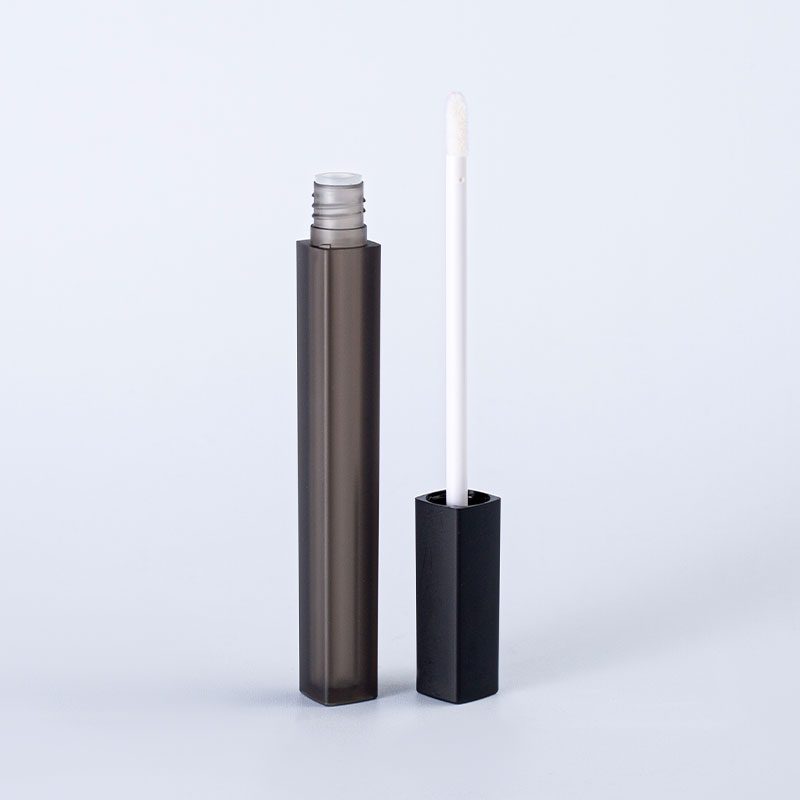 All-Black Matte Lipstick Tube with Precision ABS ConstructionThis sleek cylindrical case showcases ABS's dimensional stability and smooth finishes, ideal for precise mechanisms and minimalist branding in high-end cosmetic lines.View Product →
ABS is also the standard substrate for electroplated and vacuum-metalized cosmetic parts, and it takes UV coatings, hot stamping, and soft-touch paint with minimal pretreatment. A rose-gold collar, a glossy black mechanism, or a mirror-finish lid is therefore translated into ABS unless the part geometry forces another material.
Choose PP for containers that store the formulation for months, because its chemical resistance and moisture barrier protect both the product and the package.
Airless pump bottles are a common PP application. The body sits in contact with serum, emulsion, or oil for the whole product life, and PP resists the fatty acids and essential oils that can craze ABS over time. Its lower water vapor transmission rate also slows moisture loss, which matters for formulas stored for 12 to 24 months.
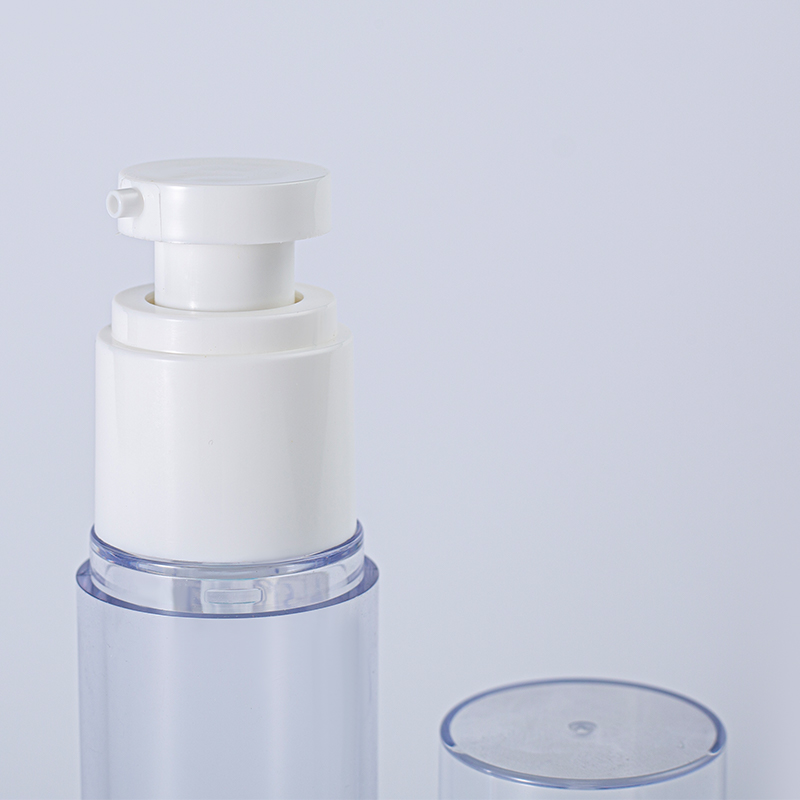 Airless Vacuum Pump Bottle for Sensitive FormulasBuilt with PP and PETG, this 15ml pump bottle resists chemical degradation and moisture loss, preserving serums and essences with airtight precision and minimal waste.View Product →
Cream jars follow the same logic. PP tolerates repeated opening, scooping, and residual product, and its flex fatigue endurance suits hinge designs in one-piece jars. For standard rounds, PP also runs at shorter lead times because it fills thin wall sections without the weld lines that can appear in ABS.
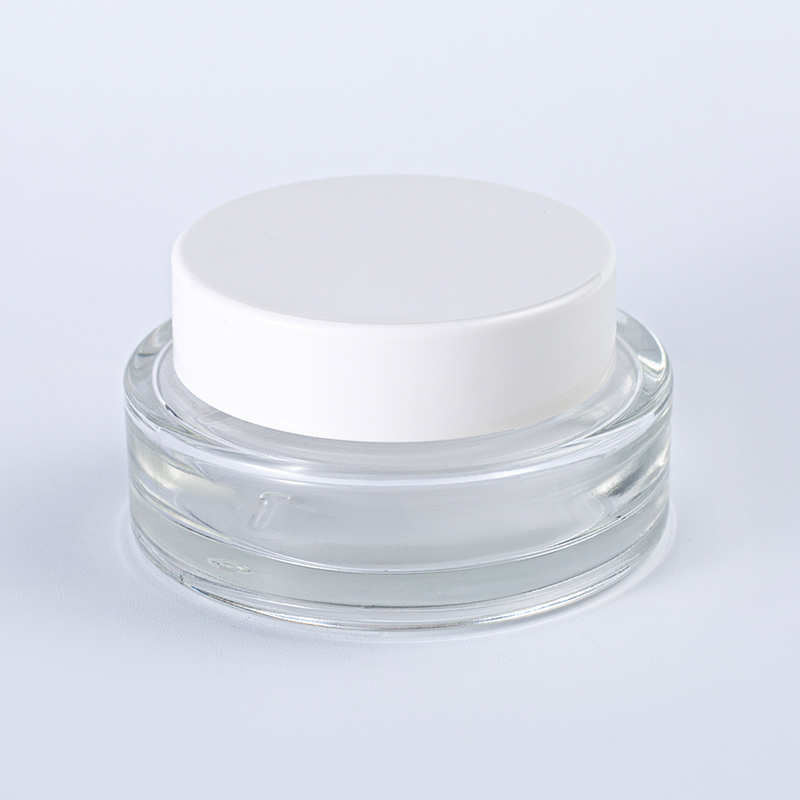
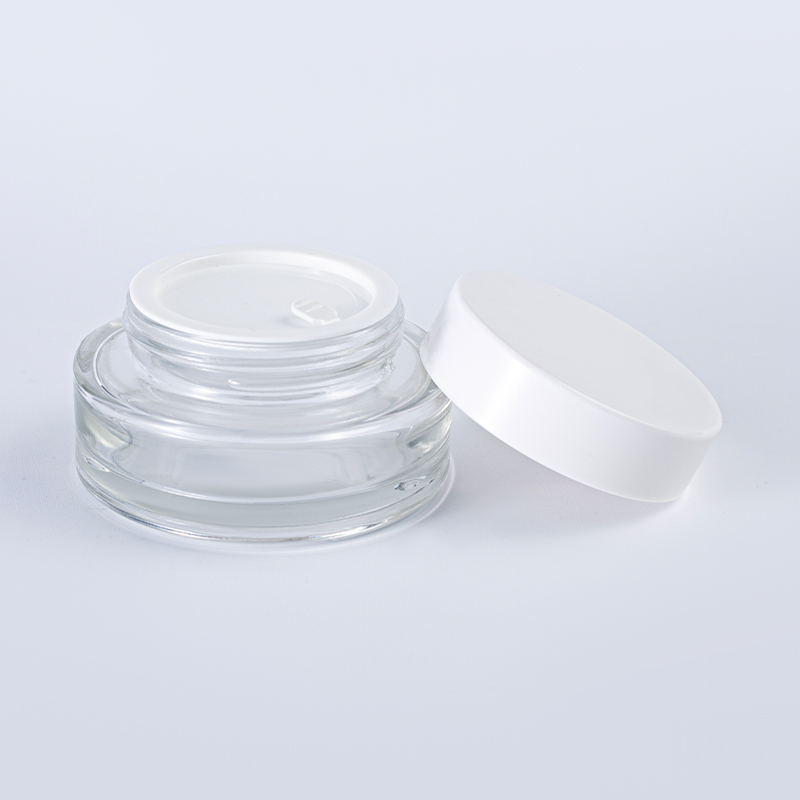 Air-Tight Clear Cosmetic Pot with Glass and ABS LidFeaturing a glass body and ABS lid, this refillable jar offers easy filling and light protection, complementing discussions on material choice for repeated-use containers.View Product →
The same packaging design can be a one-shot success or a three-round rework depending on whether the mold was designed for ABS or PP shrinkage.
PP shrinks around three times more than ABS, and the difference is rarely uniform. A mold built with ABS shrinkage values produces PP lids that bind, threads that go tight, and bodies with visible sink marks. Lock the material decision before mold steel is cut. Sumseng Group Co., Ltd., a cosmetic packaging manufacturer supporting OEM and ODM programs, runs ABS and PP in separate process windows and adjusts gate position, cooling layout, and packing pressure per material.
Material price matters, but processing cost often dominates. ABS decorates easily and holds tight tolerances, which reduces finishing rejects; PP costs less per part at scale and resists repeated stress. A partner with in-house tooling can run live cost checks for both materials on the same design, preventing the most expensive mistake: discovering after mold changes that the other material was correct.
Neither is better across the board. ABS suits decorated structural parts such as lipstick mechanisms and magnetic caps. PP suits formula-contact containers such as airless bottles and cream jars. Many packages combine both.
PP is much harder to electroplate than ABS. Electroplating and vacuum metalization are standard on ABS because the material accepts the pre-treatment chemistry and yields an even metallic layer. PP parts are usually painted, printed, or metalized with an adhesion primer, with lower durability than plating on ABS.
PP resists the oils and fragrance solvents that can make ABS craze over months of contact, and its lower water vapor transmission rate helps preserve high-water-content formulas. ABS jars exist, but they need compatibility testing.
Under stress, ABS can develop micro-cracks, known as environmental stress cracking, when certain essential oils, citrus terpenes, or aggressive fragrance solvents diffuse into the polymer. The risk rises at snap-fit stress points and thin sections. Run a 30-day oven compatibility test before approving an ABS component.