English
 中文简体
中文简体 Español
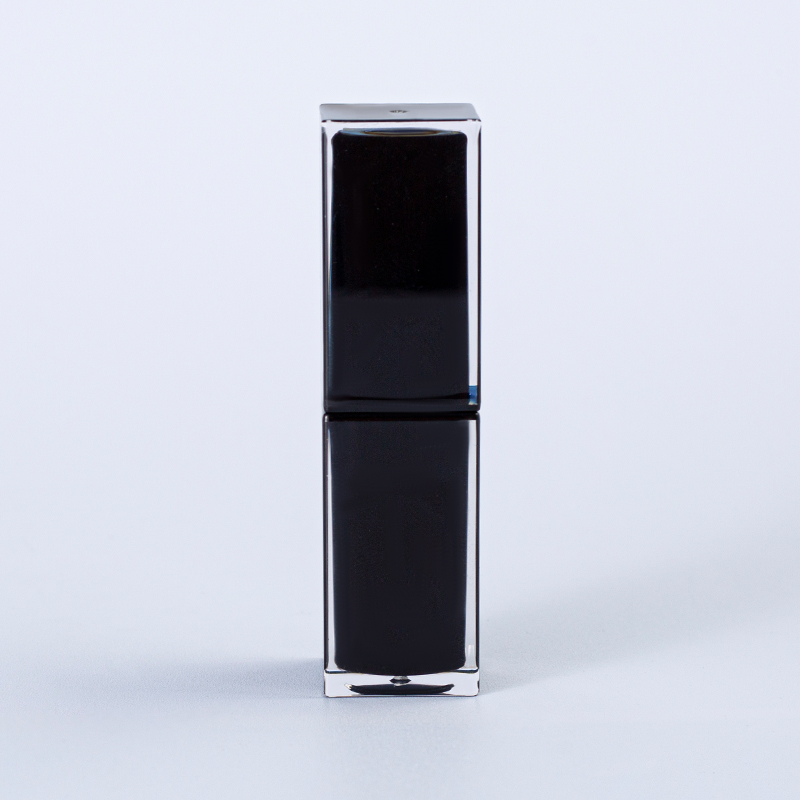
Magnetic Lipstick Case-Matte Black & Silver
Design: Matte Black finish with Silver trim.Closure: Smooth Magnetic Snap (No clicking sound).Material: Dur...
Content
The global cosmetic packaging sector relies on modern structural engineering to satisfy functional requirements and user preferences. Among single-pan compacts and multi-shade palettes, the magnetic eyeshadow case is a key primary packaging design. Unlike traditional snap-latch or press-fit containers, magnetic eyeshadow cases use targeted magnetic forces for outer closure retention and internal pan positioning.
For cosmetic brands, private-label lines, and beauty contract manufacturers, choosing between a magnetic eyeshadow case and a conventional mechanical case involves evaluating structural durability, manufacturing cost structures, consumer usability, and refillability requirements. Magnetic mechanics replace traditional plastic hinges and friction latches, which are prone to fatigue and mechanical failure over extended usage cycles.
Understanding the engineering principles behind magnetic eyeshadow cases allows brand procurement teams and product managers to choose appropriate manufacturing specifications. Primary factors include outer shell materials, magnetic strength metrics, pan metallurgy, and production tolerances. These technical decisions determine the end product’s structural integrity, opening torque, drop performance, and regulatory compliance.
The performance and market positioning of a magnetic eyeshadow case depend on its primary housing material. The three standard substrate categories used in OEM/ODM production are paperboard, rigid plastic resins, and metal alloys. Each material offers distinct advantages and trade-offs in structural rigidity, surface decoration capabilities, tooling costs, and environmental impact.
| Feature / Metric | Rigid Paperboard | Injection Molded Plastic (AS/ABS) | Premium Aluminum / Alloy |
|---|---|---|---|
| Tooling Cost | Low (Die-cut plates) | High (Injection steel molds) | Very High (Stamping/CNC dies) |
| Impact Resistance | Moderate (Shock-absorbing) | High (Rigid, prone to surface scratching) | Exceptional (Deformation proof) |
| Moisture Barrier | Low to Moderate (Laminated) | Excellent (Impermeable) | Excellent (Impermeable) |
| Surface Finishing | Foil stamping, offset printing, embossing | Color injection, UV spraying, metallizing | Anodizing, laser engraving, silk screen |
| Recyclability | High (Pulp separation required) | Medium (Resin-dependent) | Exceptional (Infinite metal recycling) |
Paperboard magnetic eyeshadow cases use high-density greyboard wrapped in art paper, kraft paper, or specialty textured papers. The structural magnetic closure relies on small Neodymium or Ferrite magnet pairs embedded directly inside the paperboard walls during the gluing assembly process.
Paperboard provides design versatility without high initial tooling costs, making it suitable for low-to-medium Minimum Order Quantities (MOQs). High-density greyboard absorbs impact forces effectively, reducing formula shattering during transport. However, paperboard requires specialized lamination coatings to resist humidity, oil migration, and powder staining.
Plastic magnetic eyeshadow cases typically use Acrylonitrile Butadiene Styrene (ABS), Acrylonitrile Styrene (AS), Polypropylene (PP), or Polyethylene Terephthalate Glycol (PETG). These materials are formed using high-precision steel injection molds.
Plastic constructions provide exact dimensional tolerances, sharp corner profiles, integrated mirror bezels, and moisture resistance. Magnets are inserted into molded cavities using automated hot-melt adhesives or ultrasonic insertion. Plastic tooling requires significant upfront capital investment, but unit costs decrease rapidly at high-volume production scales.
Aluminum magnetic eyeshadow cases offer a premium hand-feel and high durability. Stamped or extruded aluminum shells are often combined with internal plastic trays to house the magnetic system.
Aluminum surfaces undergo anodizing processes, creating hard oxide layers that resist scratching and corrosion while allowing vibrant metallic color finishes. Aluminum cases provide superior structural shielding for fragile pressed powders, but they require precise internal insulation to prevent magnet displacement caused by thermal expansion differences between metal and adhesive compounds.
The performance of a magnetic eyeshadow case depends on two magnetic systems:
| Magnetic Parameter | Outer Lid Magnet Pair | Internal Flat Sheet Magnet | Internal Embedded Dots |
|---|---|---|---|
| Magnet Type | Neodymium (NdFeB) | Flexible Rubber Ferrite | Neodymium Disc Array |
| Holding Force (Gauss) | 2,000 to 3,500 Gauss | 300 to 600 Gauss | 1,200 to 2,200 Gauss |
| Target Application | Case closure integrity | Universal open-palette floor | Dedicated pan cavity alignment |
| Mechanical Resistance | High shear and pull force | Low-to-moderate shear force | High pull, controlled shear force |
| Assembly Method | Embedded glue pocket | Laminated floor adhesive | Sonic press or glue insertion |
Magnetic holding power must be carefully calibrated:
Production standards measure retention via vertical pull-off testing and 45-degree shear displacement testing. For primary cover closures, recommended magnetic holding force ranges between 1.2 to 2.5 Newtons, balancing effortless opening with secure travel retention.
A common failure mode in custom cosmetic packaging development is magnetic incompatibility between the case base and the eyeshadow pans. Magnetic attraction depends on the metallurgy of the pan material.
| Pan Material | Magnetic Attraction Behavior | Manufacturing Solution |
|---|---|---|
| Tinplate (FE / Steel) | Ferromagnetic: Strong natural attraction | Direct magnetic attachment without modification |
| Pure Aluminum (AL) | Non-Magnetic: Zero attraction | Requires bottom stainless steel sticker |
| Stainless Steel 304 | Non-Magnetic: Zero attraction | Requires bottom stainless steel sticker |
| Stainless Steel 430 | Ferromagnetic: Moderate to strong attraction | Direct magnetic attachment without modification |
Tinplate (thin sheet steel coated with a protective layer of tin) is inherently ferromagnetic. When placed in a magnetic eyeshadow case containing either ferrite sheet bases or Neodymium dot arrays, tinplate pans attach securely without extra adhesives or mechanical clips. This makes tinplate the standard choice for refillable magnetic packaging systems.
Aluminum is non-ferromagnetic. Standard aluminum eyeshadow pans will not adhere to a magnetic base without modifications. If a brand prefers aluminum pans for their corrosion resistance and light weight, an external ferromagnetic component must be added.
This is typically achieved by applying a pressure-sensitive stainless steel sticker or iron powder tape to the outer bottom surface of the aluminum pan. Without this step, aluminum pans will slide or fall out of a magnetic case.
Cosmetic packaging designers choose between fixed multi-cavity layouts and open modular magnetic systems based on target audience needs, range versatility, and product lifecycle strategy.
| Architecture Aspect | Fixed Cavity Magnetic System | Open Modular Magnetic System |
|---|---|---|
| Internal Structure | Custom die-cut or molded wells | Continuous flat magnetic surface |
| Pan Shape Freedom | Restricted to precise cavity dimensions | Unrestricted (mix round, square, rectangle) |
| Refill Process | Specific matching pan drop-in | Universal layout rearrangement |
| Material Bill (BOM) | Higher (Requires inner frame structure) | Lower (Flat base floor assembly) |
| User Customization | Low (Fixed color organization) | High (End-user shade swapping) |
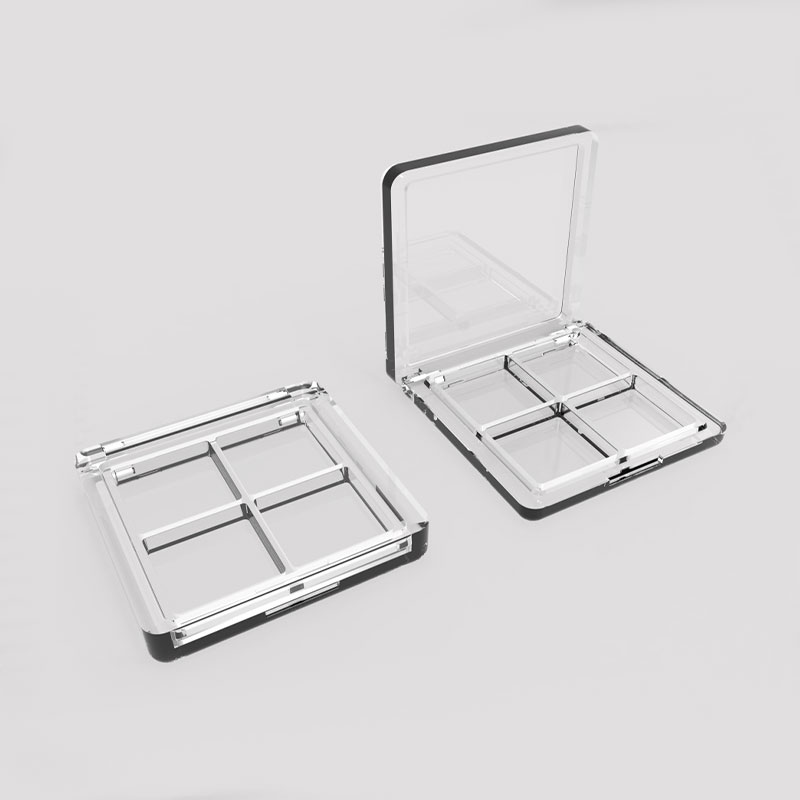
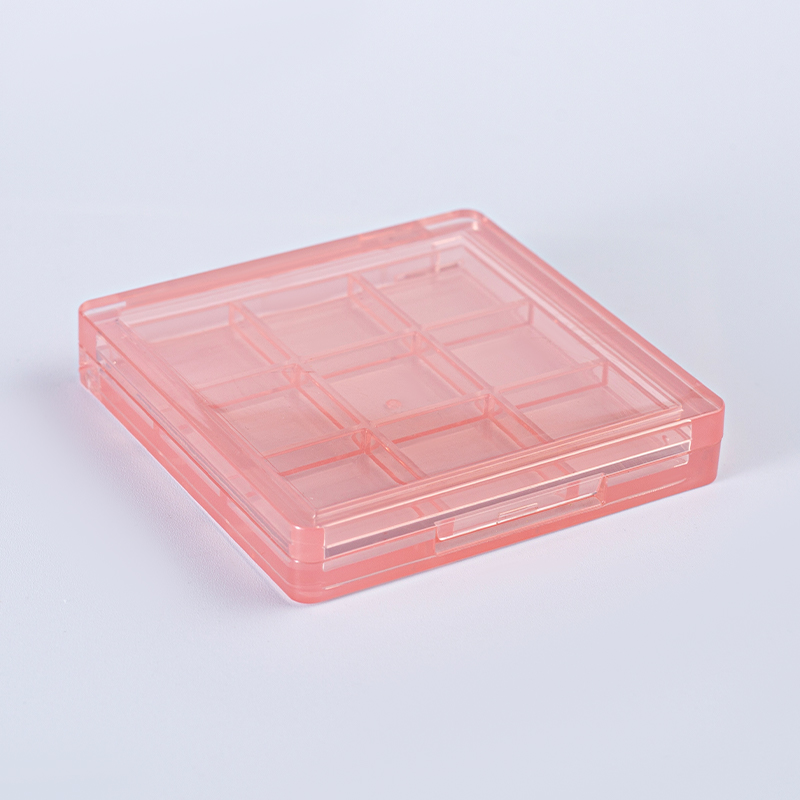
Fixed magnetic eyeshadow cases feature molded plastic or die-cut paperboard divider frames glued over a magnetic base plate. Each cavity contains an underlying magnet or sits above a magnetic layer, creating precise placement for specific pan shapes.
This design keeps individual pans aligned, preventing contact and shade migration between adjacent powder cakes. It suits pre-arranged shade color stories, gift sets, and professional artist palettes.
Modular magnetic cases remove internal dividers entirely, presenting an open floor lined with a continuous flexible magnetic sheet. This format allows users to arrange pans of various shapes, sizes, and brands within a single case.
Modular cases cater to consumer demand for personal shade selection and reduced packaging waste. For manufacturing plants, open systems eliminate the cost of developing unique inner divider molds when introducing new shade configurations.
High-volume production of magnetic eyeshadow cases requires rigorous quality control protocols across raw material inspection, automated assembly, and finished goods testing. Minor dimensional variations or magnet polarity misalignment can result in defective batch runs.
| Testing Category | Test Procedure / Protocol | Pass/Fail Acceptance Standard |
|---|---|---|
| Hinge Fatigue | 1,000 continuous open/close cycles | Zero cracking, magnet displacement < 0.1mm |
| Drop Test | 1.2 meter drop onto smooth concrete surface | Case remains closed; zero pan pop-outs |
| Thermal Shock | -20C to 60C temperature cycling over 48 hours | Adhesive holds; magnet remains firmly secure |
| Corrosion Test | Neutral Salt Spray (NSS) for 24 hours | No visible rust or pitting on metal components |
| Magnet Adhesion | Cross-hatch tape and vertical pull-off test | 100% magnet retention in structural housing |
No. Standard pure aluminum pans are non-ferromagnetic and will not stick to magnets. To use aluminum pans in a magnetic case, apply a stainless steel or ferrous metal disc with adhesive backing to the bottom of each pan. Alternatively, choose tinplate (steel) pans, which naturally attach to magnetic bases.
Preventing magnet detachment relies on correct cavity depth design and adhesive selection. Cavities must be engineered so magnets sit flush or slightly recessed (0.05mm to 0.1mm below the surface). Fastening requires industrial-grade structural adhesives, such as polyurethane hot-melts or UV-curing epoxies, combined with plasma surface treatment for plastic housings to improve bonding adhesion.
The ideal holding force for outer lid magnetic closures ranges between 1.2 Newtons and 2.5 Newtons (or roughly 1,500 to 2,800 Gauss at the magnet surface). This range provides enough retention force to keep the case closed during transport, while remaining easy to open without risking fingernail damage or jarred powder breakage.
Yes. The static magnetic fields generated by cosmetic packaging magnets are low-power and localized. They fall below the threshold regulations for magnetized material transport set by the International Air Transport Association (IATA). For large-volume bulk shipments, standard cardboard master outer cartons provide sufficient spatial distance to ensure zero interference with external transport navigation equipment.
Paperboard magnetic cases feature lower upfront tooling costs, making them economical for lower production volumes and fast market launches. Injection-molded plastic cases require significant initial capital investments for steel molds, but yield significantly lower unit costs at high manufacturing volumes.