English
 中文简体
 Español

Airless Vacuum Pump Bottle
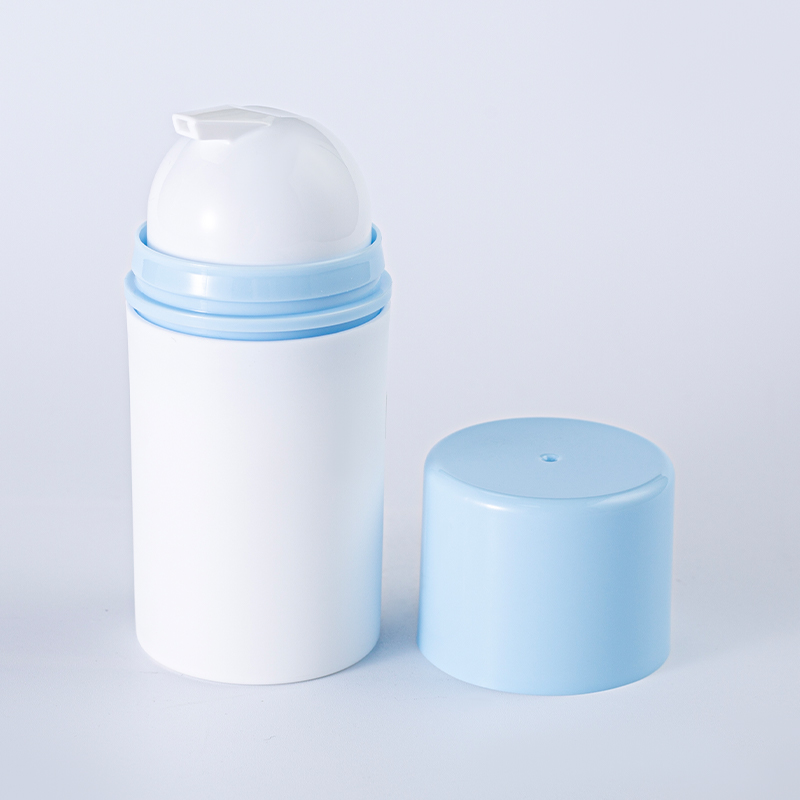
Preserve your formulations at their best with our advanced airless vacuum pump technology. This elegant white ...
Content
A vitamin C serum that turns from pale yellow to amber three weeks after opening is rarely a formulation error. It is a packaging failure. The airless pump bottle mechanism exists to prevent exactly that: it delivers a measured dose while keeping the remaining formula sealed from outside air. For brands developing serums, emulsions, and creams with oxygen-sensitive actives, choosing the right airless pump mechanism is a technical decision that affects shelf life, preservative load, and user trust. This guide covers the mechanism's operation, the construction types that dominate production, and the checks that prevent sourcing mistakes.
An airless pump bottle mechanism works through vacuum-driven piston travel instead of a dip tube. Pressing the actuator compresses the chamber and forces product out through the discharge valve; releasing it lets the spring return and creates negative pressure inside the reservoir. That vacuum pulls the piston upward and pushes the next dose into the chamber. Outside air never enters the product side of the bottle.
A dip-tube pump replaces each dispensed milliliter with air in the headspace, creating the main oxidation pathway for products stored over months. Airless packaging removes that pathway by construction.
Four components carry the load:
Oxygen degrades vitamins and plant actives faster than most other post-fill factors, and the airless pump bottle mechanism is the most effective defense at consumer packaging cost levels.
L-ascorbic acid is the clearest example. In an open jar, every opening renews oxygen contact across a wide exposed surface; stability studies routinely show measurable activity loss within weeks. Sealed inside an airless reservoir, the bulk formula sees oxygen only in the small volume trapped in the chamber at dispensing.
Relative oxygen protection index across common packaging systems. Scores are comparators for selection, not certified lab data.
An airless mechanism directly supports formula stability in four ways:
Three construction formats dominate airless packaging today. They share the same vacuum principle but differ in filling logistics, leak risk, and the bottle material they allow.
| Mechanism type | How it works | Best suited for | Main sourcing risk |
| Screw-on pump | Pump head threads onto the bottle neck; the piston rises from the base as product empties. | PET and PP bottles, mid-volume skincare lines | Thread tolerances can cause gasket creep and leakage if over-tightened |
| Crimp-neck pump | A metal ferrule crimps the pump onto the glass neck to form a hermetic seal. | Glass bottles, premium serums | Glass neck dimension variance requires strict incoming inspection |
| Bottom-fill pump | Bottle is filled from the open base; the base cap then seals over the pre-installed piston. | High-viscosity creams and balms | Base joint needs an extra seal check after filling |
Pump internals are generally polypropylene, with stainless steel or coated springs. For high-alcohol or essential-oil formulas, specify EPDM, silicone, or nitrile seals instead of natural rubber; alcohol can wash out pump grease, so check lubricant compatibility.
Before committing to a bulk order, verify four things: dose-volume accuracy, gasket compatibility, vacuum behavior under shipping pressure, and the supplier's quality-control records.
Sumseng Group Co., Ltd. supports OEM and ODM skincare packaging programs with airless pump bottles in plastic and glass. Representative products from the airless pump bottle range:
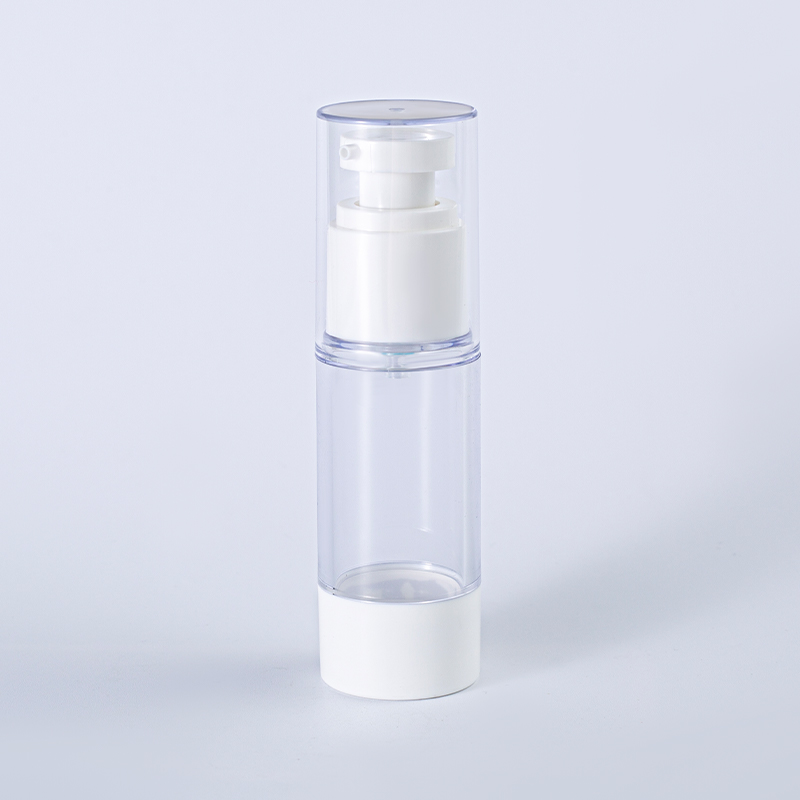
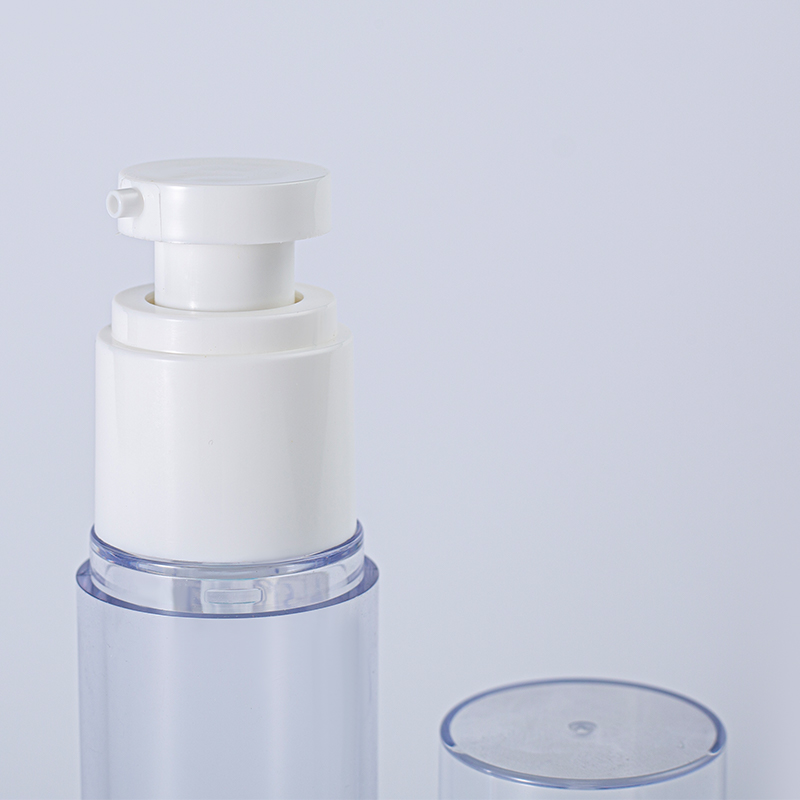 Compact Airless Vacuum Pump Bottle for Precise Serum DispensingThe SY7106G offers a 15 ml cylindrical design with piston technology to protect serums and creams from air while ensuring consistent, waste-free dosing.View Product →
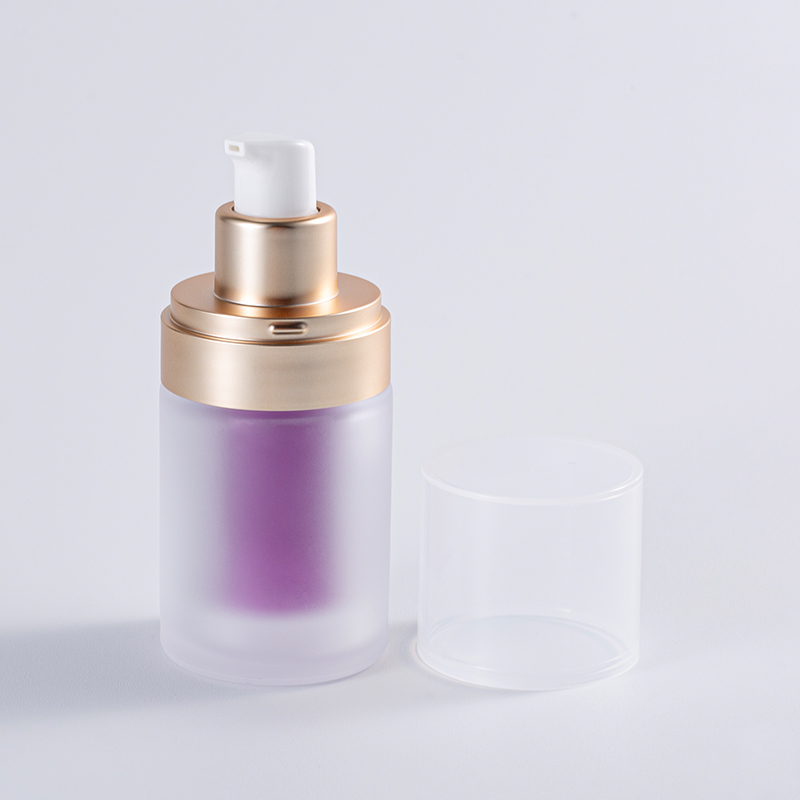 Premium Glass Airless Pump Bottle with Double-Wall DesignThis elegant glass bottle features a protective airless pump and inner flask, slowing oxidation while dispensing serums or foundations with minimal residue.View Product →
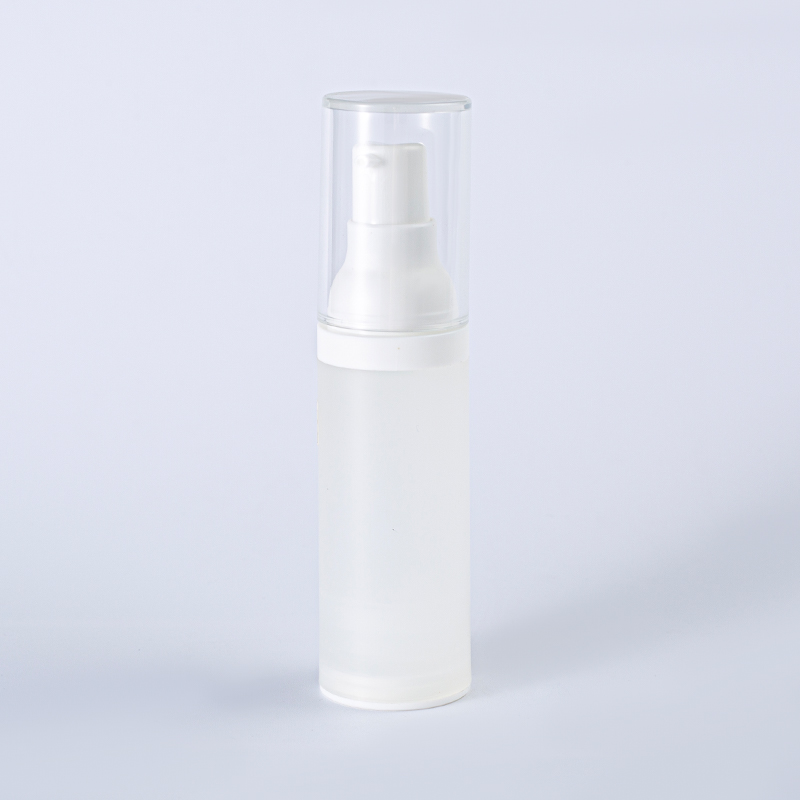 Matte White Frosted Airless Pump Bottle for High-End SkincareThe SY7108G combines a soft-touch frosted finish with PP vacuum-sealed construction, available in 30 ml and 50 ml for luxury serums and essences.View Product →
The most reliable evaluation is a 30-day trial: fill 50 units, store them upright and inverted at 40 degrees Celsius, and measure dose volume every week. Piston travel should stay consistent from the first stroke to the last.
Only if the pump head is rated for the cream's viscosity. Heavy balms need a larger chamber and a stronger spring; watery serums need a smaller chamber to avoid over-dispensing. A common mismatch is using a lotion pump for a serum, which delivers too much product per stroke.
Three causes appear repeatedly: a piston that no longer seals against the bore, a valve clogged by dried formula, or a gasket swollen by the formula. The first is a dimensional-tolerance issue; the other two are material-compatibility or hygiene issues.
Yes, with restrictions. High-alcohol formulas require elastomers that resist swelling and a pump that keeps its internal lubrication. As a rule of thumb, request compatibility testing for formulas above roughly 20 percent alcohol before tooling.
Most airless pumps deliver 0.1 to 1.0 ml per stroke depending on chamber geometry. For skincare, target 0.2-0.3 ml for serums and 0.5-1.0 ml for lotions and creams; the dose is fixed at the factory.
An airless pump bottle mechanism is a purchasing decision with measurable consequences: less oxidation, lower preservative demand, and a consistent end-user experience. It is also the one part of the pack that cannot be evaluated from a catalog; it needs samples, trials, and compatibility data. Sumseng Group has supported cosmetic packaging since 2006, with dedicated manufacturing since 2019, and offers in-house tooling, molding, and decoration for OEM and ODM projects. Send your formula and fill-line details through the service page to shortlist the right mechanism.